The Nurse Farmer ‘Falls’ Behind Schedule: Preparing for the Autumn Garden
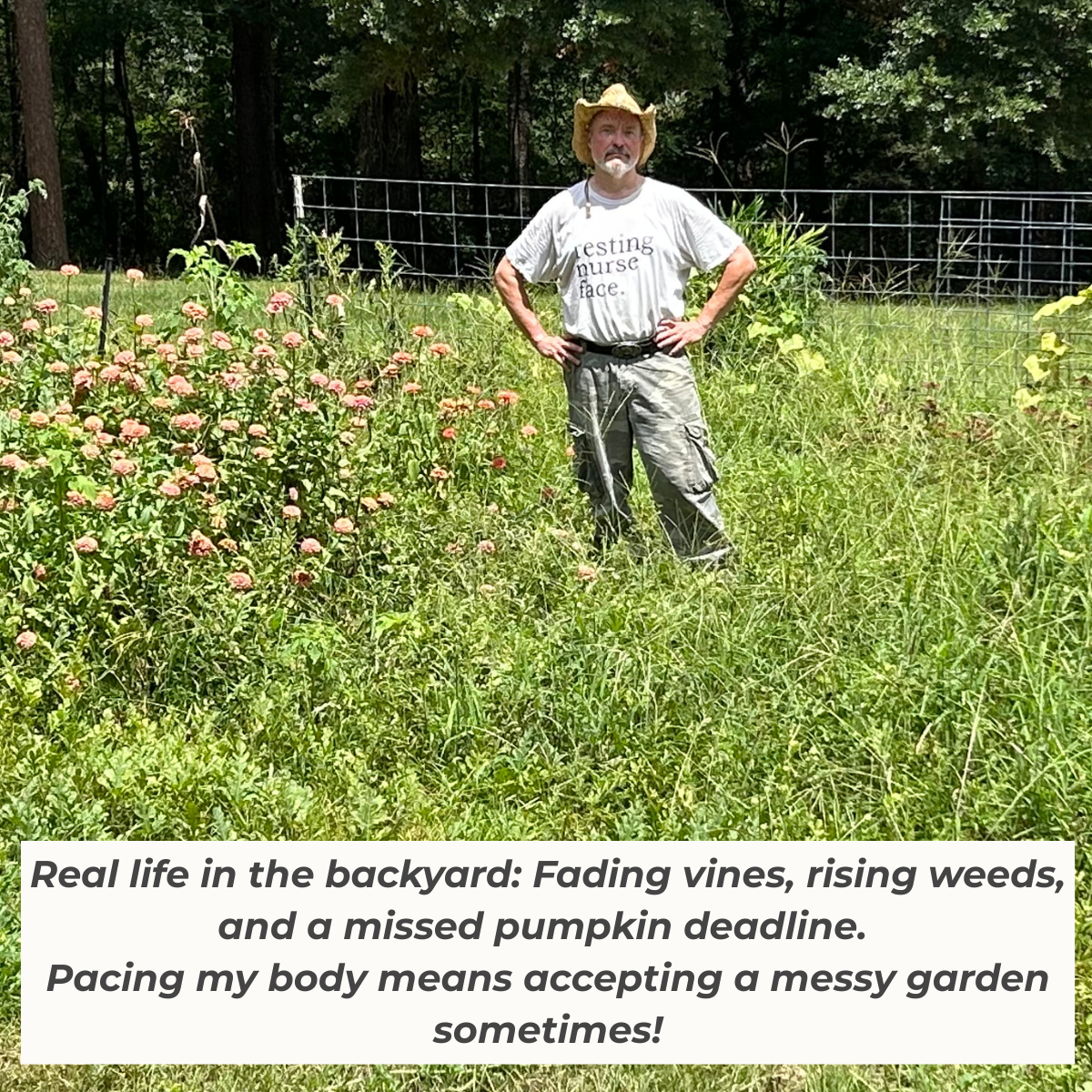
There really are watermelons hiding underneath the grass and weeds!
I went on vacation a few weeks ago, including a nursing conference. Prior to that, I spent a lot of time updating my website and working on my blog. There are only so many hours in the day. Plus, I have my day job.
Needless to say, I have neglected my garden a little. My cantaloupes are at the end of their life cycle. The tomato vines are dying. Grass is beginning to take over the watermelon patch, and I am late getting my pumpkin seeds started.
What can I say? Life happens! I can only do so much in a day. Managing my arthritis and tendinitis further complicates things. It is now late summer. The Alabama heat and humidity can be treacherous, especially for older adults.
However, I am not going to let this overgrown mess or the oppressive heat get the best of me. When I was a younger man, I could have renewed the whole garden within a day or two. Now that I am nearly sixty years old, I am not as industrious as I used to be.
On the other hand, do I really need to be industrious? Did I ever need to be, even when I was younger? Probably not.
There is nothing wrong with slowing down. Taking the time to tackle chores a little bit at a time is a wonderful approach. In fact, that slower pace works to my advantage. It gives me time to map out my fall garden layout. I can even get my pumpkin seeds started right now in a compostable seed starting pot. That gives them time to sprout while I get my beds prepared.
Do you ever find yourself in similar predicaments? What do you do in situations where you feel overwhelmed with your backyard?
Here are the nurse workarounds and shortcuts I am using right now to catch up without breaking my body:
⏱️ Pacing and Problem Solving
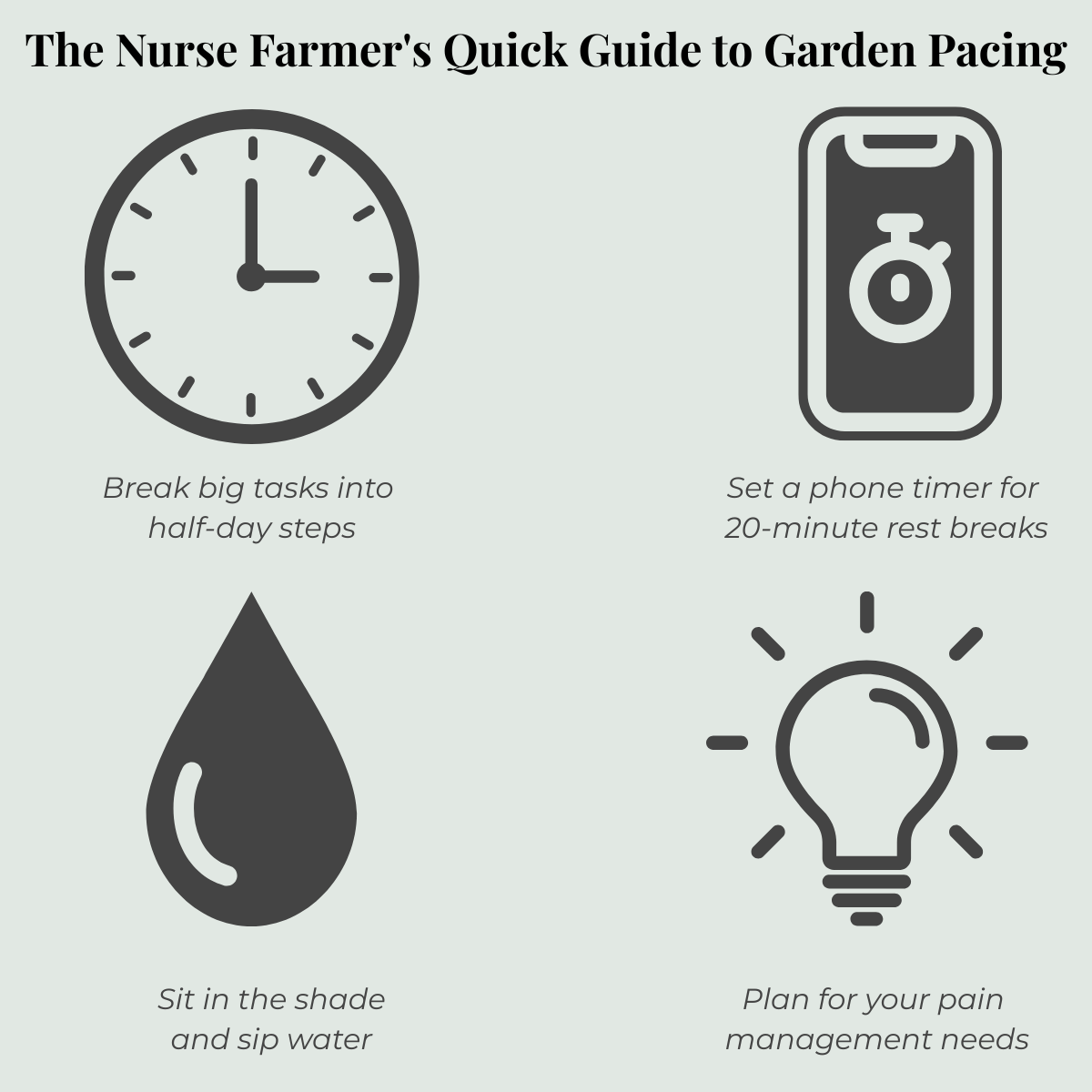
I plan my tasks carefully. I ask myself if I have a reasonable amount of time to complete a chore on a given day. If not, what are my alternatives? Could I do half of the task today and finish tomorrow? What shortcuts can I take? Breaking big chores into bite-sized pieces saves my joints and preserves my energy.
📱 The Cell Phone Timer Trick
I always schedule regular rest periods, especially on extremely hot days. I set the timer on my cell phone for 20 to 30 minutes. Even if I do not feel hot or tired yet, when that timer goes off, I stop. I make a point to sit in the shade, rest for a few minutes, and sip some water.
💊 Strategic Pain Management
I always ask myself how my work today will impact my health. Do I need to take pain medication prior to working in the garden? If so, I eat something substantial first so the medication does not upset my stomach.
On the other hand, if it is later in the day, I may choose to skip the medication before gardening. Saving that dose for bedtime ensures better nighttime pain management so I can sleep well. If I am dealing with sharp back pain, I will apply an ice pack to my lower back before I ever head outside.
🍂 Letting Nature Do the Heavy Lifting
I use nature to my advantage. I don’t have to pull up every single dying plant or rake up every dead leaf. A lot of these can be safely tilled or hoed straight back into the soil. As they decay, they add rich nutrients and organic matter back to the earth.
If I am lucky, next year I will get a few ‘volunteer’ plants from the seeds that spilled into the soil this season. In fact, I can probably quit buying Mexican Sunflower seeds entirely on my farm! They return year after year in odd, unplanned places from the previous year's dropped seeds.
📋 The Intermission Advantage
As I mentioned earlier, falling behind schedule has a hidden advantage. I can plan out my autumn garden layout on paper. I use this extra rest time to peruse seed catalogs for fall seeds.
I can also purchase pre-grown potted fall plants from local nurseries to place directly in the ground later. I can even get seeds started in seed starting trays—like those pumpkins I mentioned—while I work on restoring the old summer patch.
Yes, I have fallen behind on my fall garden, but I’ve got a plan, and I’m sticking to it!
