Even The Nurse Farmer Forgets: My Cautionary Hydration Story
The whole point and moral of this story is very simple: stay hydrated and avoid overheating while gardening outside. I mean, we all know that, right? Being a nurse, of course, I know that too. Yet, despite that, there have been a couple of times when I have allowed myself to overheat and dehydrate.
How could I allow that to happen? As a nurse, I know better, right? Of course, I do! These incidents weren't a knowledge deficit on my part. Not even defiance. My problem is two-fold: one part mental, and one part physical.
My mental problem is that I sometimes think I am still forty-something years old. If I get thirsty or overheated, I think I will just run back to the house, drink some water, eat a snack, and run back outside to finish my tasks. Nice thought!
My physical problem is that even though I am active and run about two miles three times a week, my body has slowed down. This slowing down allows problems like dehydration and overheating to sneak up on me rather quickly.
The Day the Vineyard Sneaked Up on Me

Standing in front of my corn crop, wearing sun-protective clothing and keeping my water bottle close by!
One summer, while I was gardening in my vineyard, I overheated. I didn’t have any water with me. Sweating profusely and thirsty, I thought to myself, “I’ll be fine. I’m going to work just a little bit longer. In a few minutes, I will sprint back to the house, drink some water, and re-hydrate myself!”
Only, in a few minutes, I suddenly started feeling lightheaded and somewhat disoriented—definite signs of dehydration. I was unable to walk, let alone sprint back to the house. I didn’t have my cellphone with me, so I couldn’t even call for help.
I managed to crawl over and find a shady spot close by. After sitting in the shade for a few minutes and cooling off, I was finally able to walk back to the house. I drank lots of water and rehydrated myself, deciding to call it a day.
I didn’t have the energy to go back out in the heat to continue tending to the vineyard. Plus, I felt somewhat emotionally traumatized. I kept thinking about how easily I could have ended up with an unnecessary trip to the emergency room or a hospitalization. “I’m a nurse! I know better than this!” Given the seriousness of how my situation could have deteriorated, I decided to share my story and some tips on how I avoid putting myself in similar predicaments again.
The Nurse Farmer’s Rules for Water and Energy
When I was a home health nurse, I generally preached drinking at least one gallon of water per day, every day. Most sources agree, although this is just a generalization. If you are in doubt or have concerns about how much water you should consume daily, please check with your healthcare provider.
We may need more water depending on factors such as heat and activity level. We may need less depending on any underlying health issues. Today, I drink plenty of water before gardening outdoors. I also take a couple of cold water bottles outside with me. If it is extremely hot, I may refrigerate them the night before so they are good and cold. I generally buy large water bottles at a gas station, refill them, and reuse them rather than throw them away.
Not only do we need water for hydration, but we also need food for energy. I always eat a meal before I go outside to play in the dirt. Despite eating beforehand, hunger tends to sneak up on me somewhat quickly. I will feel fine for a couple of hours and then suddenly feel extremely hungry.
To help prevent and manage these episodes, I keep a snack close by like an apple, a banana, or a package of peanuts. I might even make a sandwich or have some hummus with pretzels. These are just a few examples of quick, nutritious, easy-to-eat snacks that satisfy my hunger while I finish my outdoor gardening.
The Ultimate Lifeline: Your Cellphone
I always take my fully-charged cellphone with me now. I did not have my phone with me that day. If I had my phone, I could have called or texted my husband or my sons to bring me some water. If my condition had continued to deteriorate, I could have called 911.
My predicament that day also made me think about other scenarios where I might need my cellphone. What if a wild animal attacked me? What if a poisonous snake bit me? What if I fell and broke a bone? Now, I keep my cellphone with me at all times so I can call for help. So should you!
Timing and Creative Shade
Timing is also a major factor in staying well-hydrated. Early morning and late afternoon are ideal times to garden. The temperatures are generally cooler than those at midday. However, it may not always be feasible or reasonable to garden strictly during those hours.
In fact, there are times when gardening in the middle of the day works best for me. Heat, combined with the physical activity of gardening, causes us to perspire and lose more water. Even when I feel like I don’t have time, I make a point of avoiding overheating by taking frequent rest breaks in the shade and drinking water.
If you are lacking a shaded area in your garden, think outside the box and create one! I create my own shaded area by parking my truck close by. When it’s time to cool off, I sit inside my truck for a few minutes with the air conditioner on and drink some water. Sometimes, we have to be creative and innovative!
A Cautionary Warning and One Final Tip
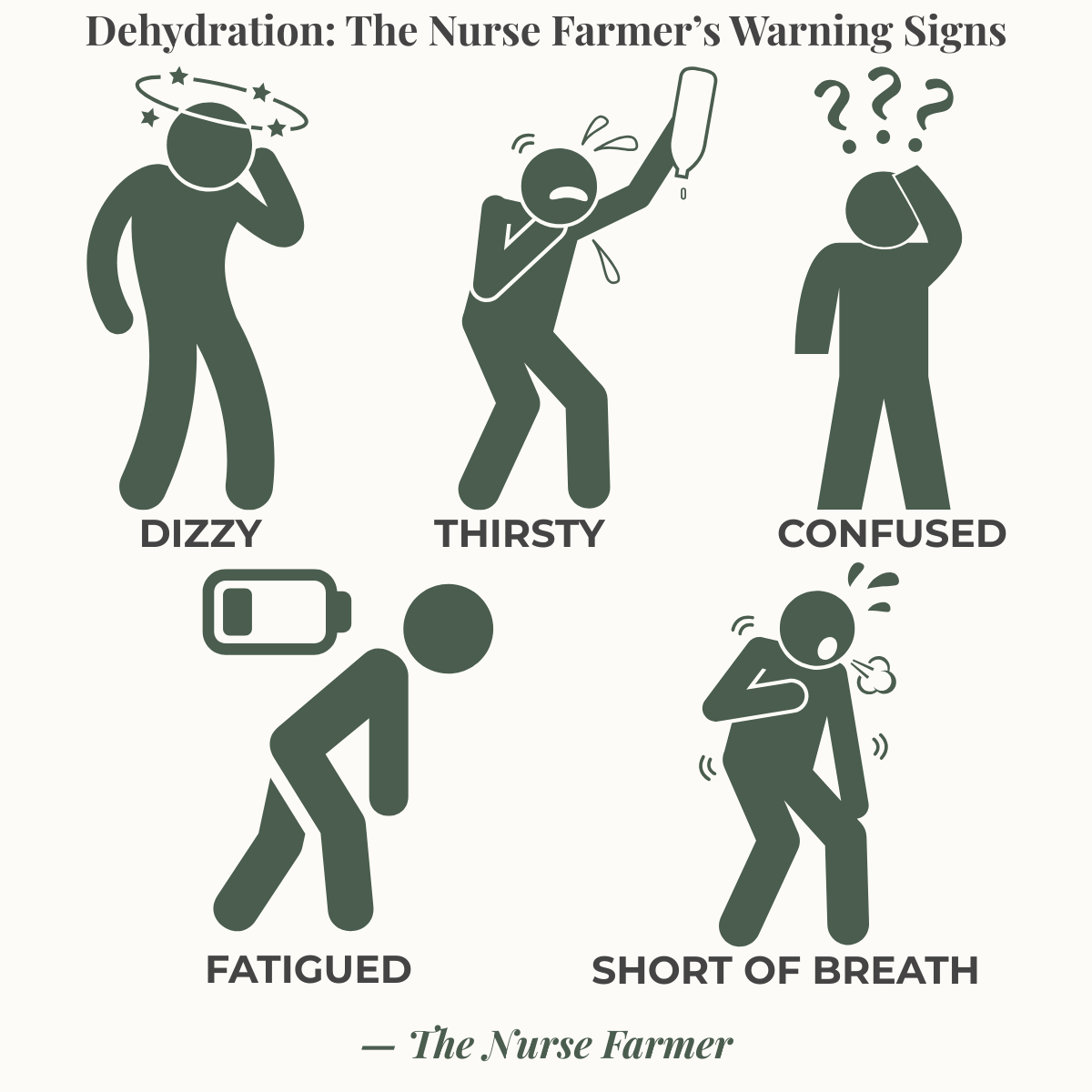
I hope my story serves as a warning about the importance of staying hydrated and keeping cool. Not drinking enough water and overheating can lead to disaster. Stay hydrated! Stay cool! Even if you feel like you don’t have the time or you’re in a hurry—stop! Make the time. Drink some water, eat a snack, and cool off. Be creative and innovative!
In closing, I will share one more helpful tip. Even if we wear gloves in the garden, our hands will inevitably get soiled with dirt and possibly parasites. I recommend keeping a bottle of liquid hand soap dedicated to outdoor use close by for handwashing.
If you don’t have a water hose close by for handwashing, keep a large-sized milk jug or soda bottle filled with water solely for handwashing. This will make it easy for you to wash your hands before drinking water or eating a snack while you are outdoors. There is an old nursing saying that is still true today: “Handwashing is the single most important means of preventing infection.”
