Winter Is The Time To Plan Your Spring Garden
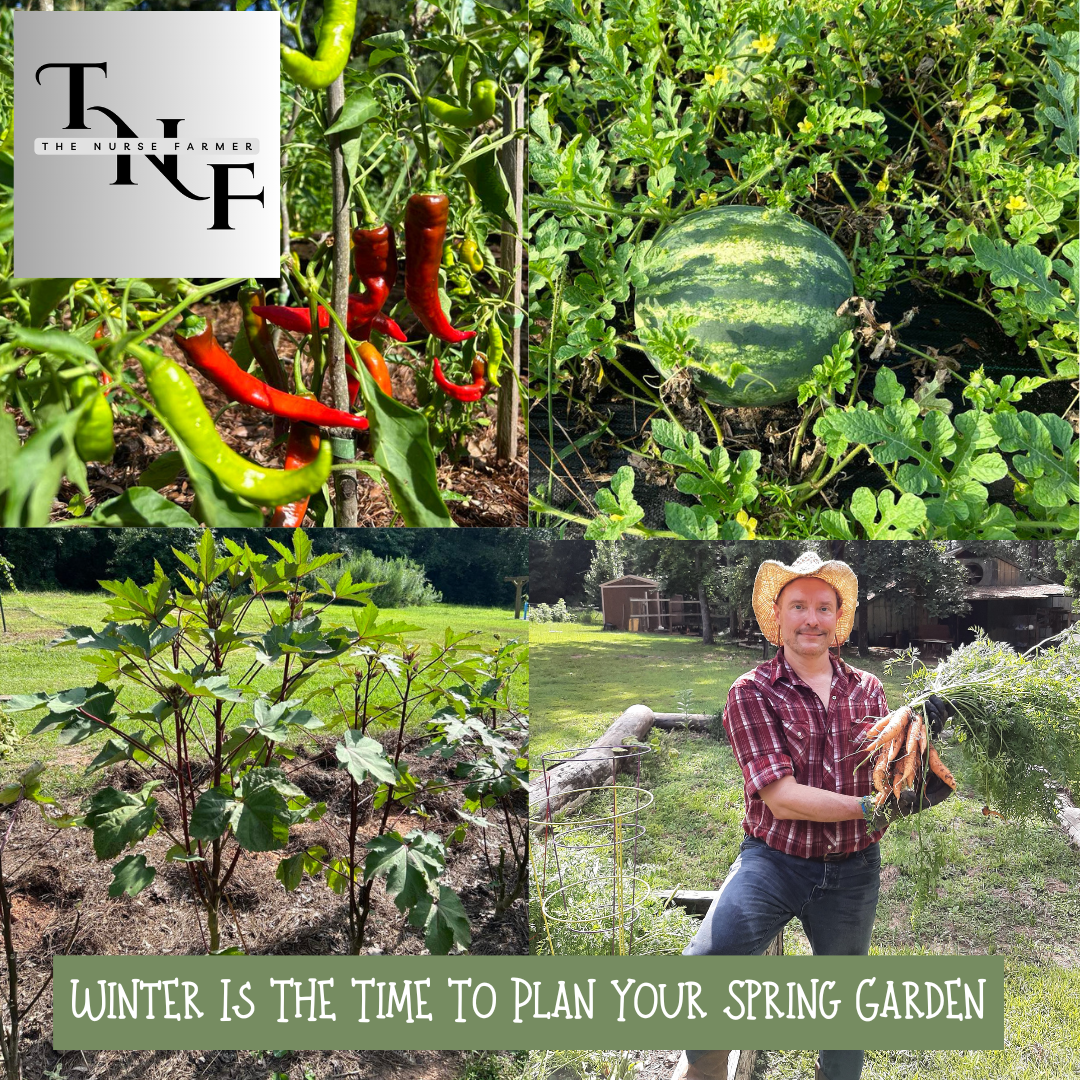
If you think there is not much to do in the garden during the winter, you are wrong! Winter is an ideal time to plan and prepare a spring garden. Preparing a spring garden during the winter gets us outdoors to get some exercise and boost our mental health during the shorter, darker days. I think of winter as my ‘down time’. Planning and preparing now gives me a head start and means less work in the spring! I use the cooler temperatures to my advantage. Even though I dress warm, I find the cold less taxing on my body, allowing me to perform the more strenuous chores in preparation for a spring garden. Today, I’m going to share some helpful and healthy tips to help you make the most of your spring garden during the winter months.
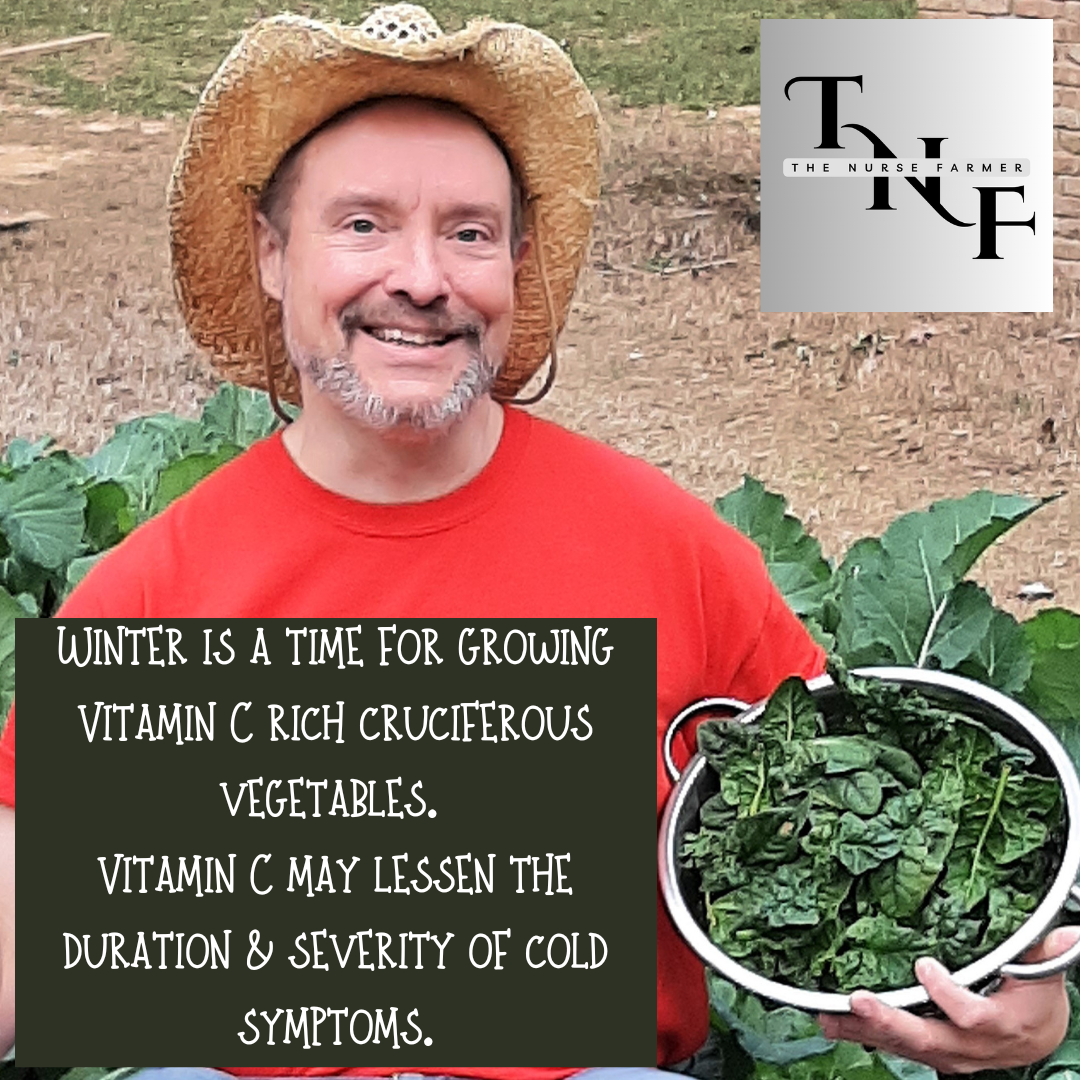
Just because it is winter doesn’t mean you can’t grow vegetables. There are many vegetables that grow during the cold months. Let’s take onions, for example. I planted a raised bed full of Red Creole Onion in November. Being cold hearty, they have survived several frosts and are still growing very well. Other vegetables that thrive well in the winter are cruciferous vegetables. Often referred to as ‘dark-green, leafy vegetables’, cruciferous vegetables are nutrient dense super-foods which include broccoli, Brussels sprouts, cabbage, cauliflower, collards, and turnips. Instead of growing from seed this year, I took a short-cut and bought several six-packs of dark-green leafy plants. I transplanted each of them into individual large pots on my back porch. They are all thriving very well. Another reason to grow cruciferous vegetables during the winter is that most cruciferous vegetables are good sources of Vitamin C. Evidence shows that regular and consistent consumption of Vitamin C prior to catching the cold may help reduce the duration of your cold symptoms.
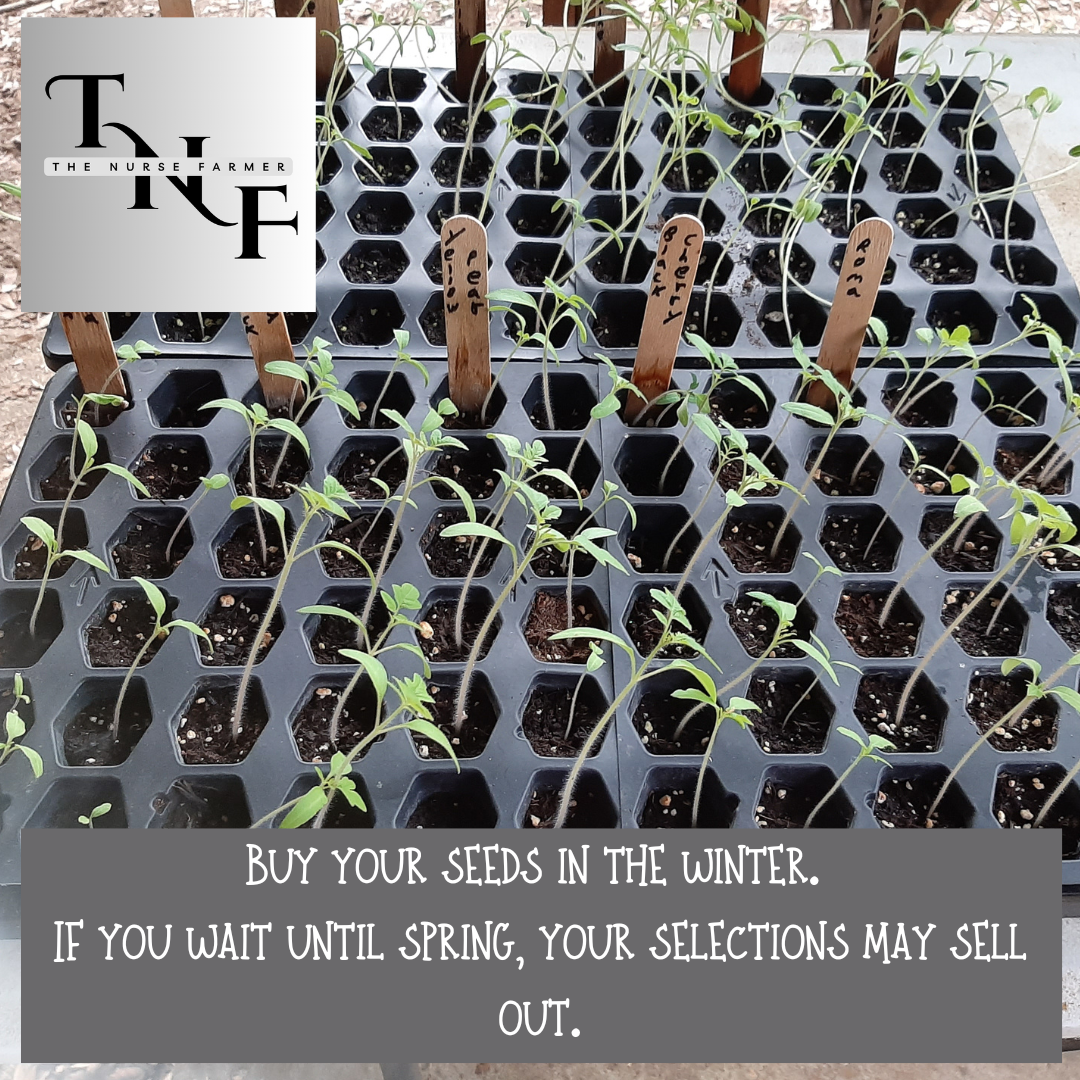
Winter is a time to think about ordering seeds for spring. I have set a goal to order all of my seeds during the early part of January, before my selections sell out. I encourage you to do the same. The longer I wait, the more likely I risk my choices selling out before spring. Most of the seed companies that I follow allow me to save my seed selections in a virtual wish-list so that my selections are easily retrieved when I am ready to place my order. Most seed companies also have seed selection filters on their websites. Use those filters to your advantage. You can narrow your seed search using options such as plant color, days to maturity, plant height, and disease resistance. This year, I am making my tomato selections based on resistance to a fungal disease in my soil called Fusarium. Fusarium causes a fatal plant disease in tomatoes called Fusarium wilt. One of the seed companies I order from has a filter for disease resistance that I can apply specifically for tomatoes that are resistant to Fusarium.
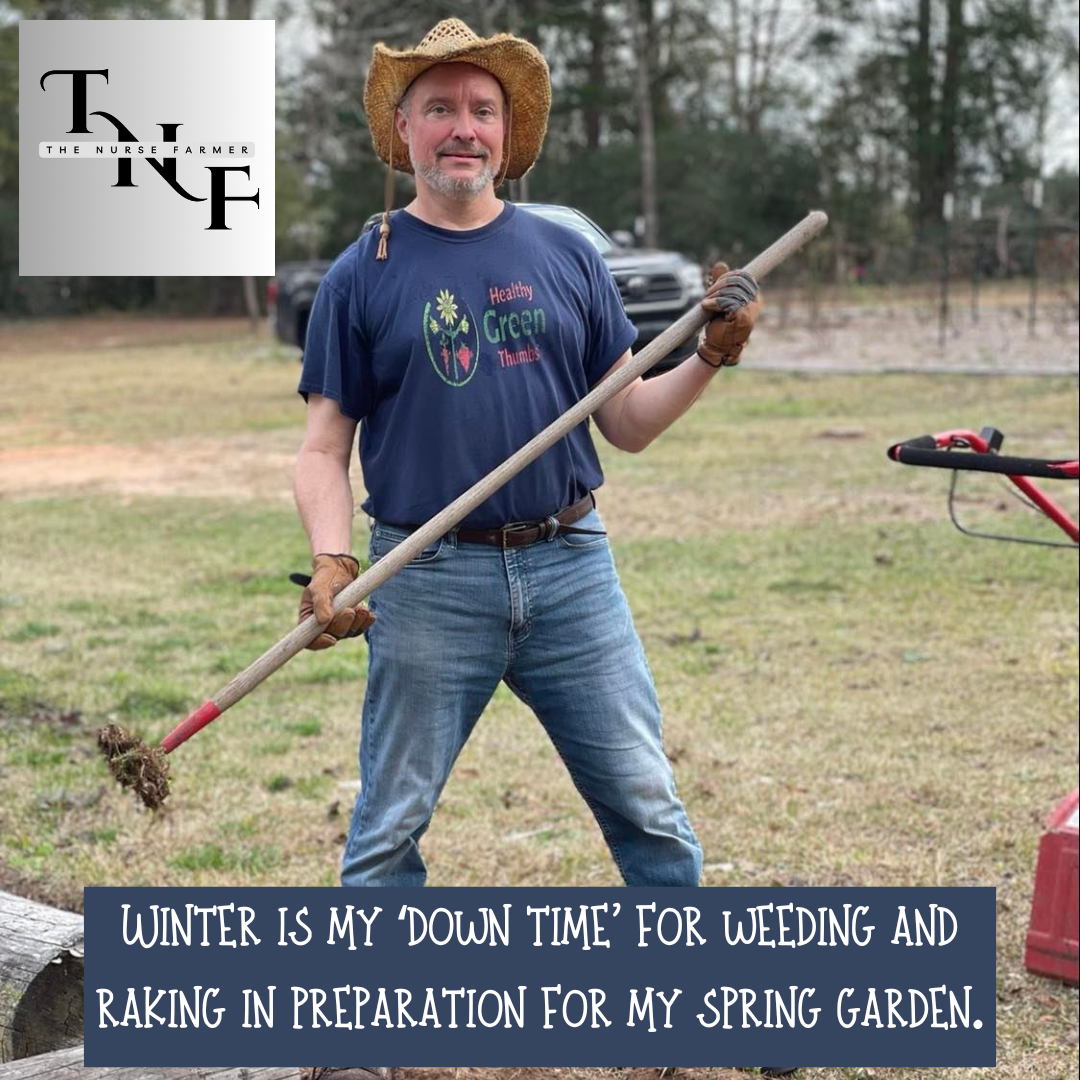
Winter is a cool weather opportunity to start preparing your spring beds. I find that weeding the soil in my beds prior to spring, disrupts weed growth before the weeds get to big and consume the whole bed. I generally weed and hoe my beds about once every three to four weeks. I typically add organic matter such as egg shells, leaves, straw, and manure. Organic matter will break down into compost and fertilizer for my flowers and vegetables. Weeding my beds gives me some much needed winter exercise and a head start on my spring garden. Raking can be a strenuous form of exercise. I find that raking in the cooler winter temperatures is less taxing on my body and allows me to get more work accomplished. When I rake up leaves and straw, I make large mounds which I place near my beds for easy access in the spring. After my spring plants are established, I take straw and leaves from the mounds to use for mulch around my vegetables. The mulch acts as a suppressant to help minimize weed growth. Mulch helps minimize the need for watering. It also acts as a barrier between plants and soil, helping prevent soil-based microbes from splattering and spreading on plant leaves.
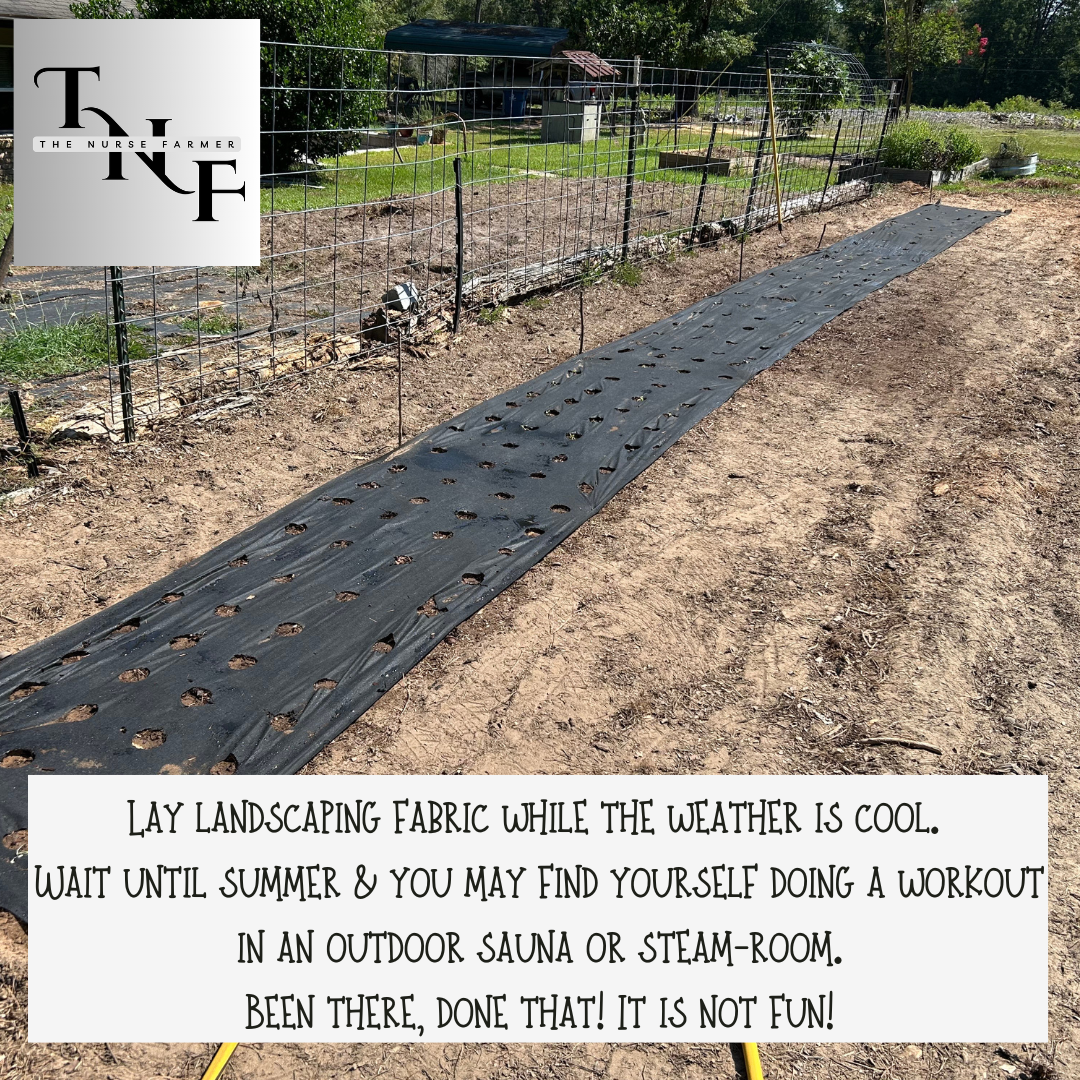
Laying landscaping fabric can be somewhat labor intensive, especially if the fabric is being applied to a large size bed. If you are an older adult like me, the workload can be even more intense. I find myself constantly getting up and down, rolling fabric across the soil, hammering landscaping pins in place, pushing the wheelbarrow from one end of the garden to another… You get the picture? Laying landscaping fabric can be quite a workout. If you are going to apply landscaping fabric to your garden bed, do it now while the weather is cool. Otherwise, you may find yourself doing an aerobic workout in an outdoor sauna or steam-room. Been there, done that! It is not fun!
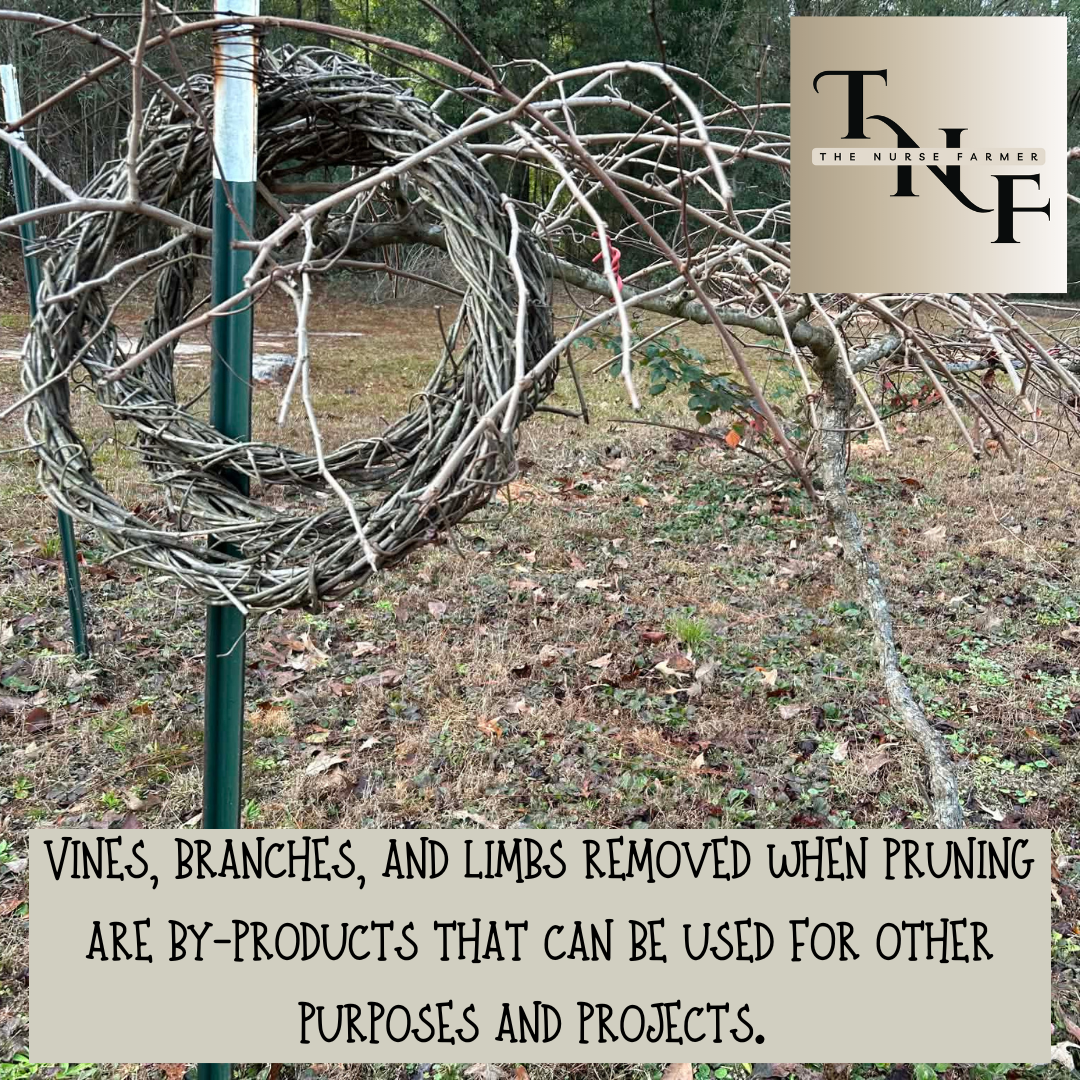
Pruning and trimming are not necessarily labor intense activities. However, pruning and trimming are generally done in the winter months while trees and vines are dormant. Pruning helps stimulate new growth in the spring. I think of the vines, branches, and limbs that I remove as by-products that can be used for other projects and purposes. For example, when I cut my muscadine grapevines, I almost immediately weave them into wreaths while the vines are still pliable. The wreaths will harden off and become ridged so they can be decorated later in the year. I cut the larger muscadine wood into smaller pieces to use for smoking meats in my smoker. Small tree branches and limbs can be used as kindling to start fires, whereas larger limbs can be cut into logs for indoor or outdoor fireplaces. Long, straight, slender limbs can be used to make roosts for chickens. They can also be used to make tripods and other types of trellises for a spring garden.
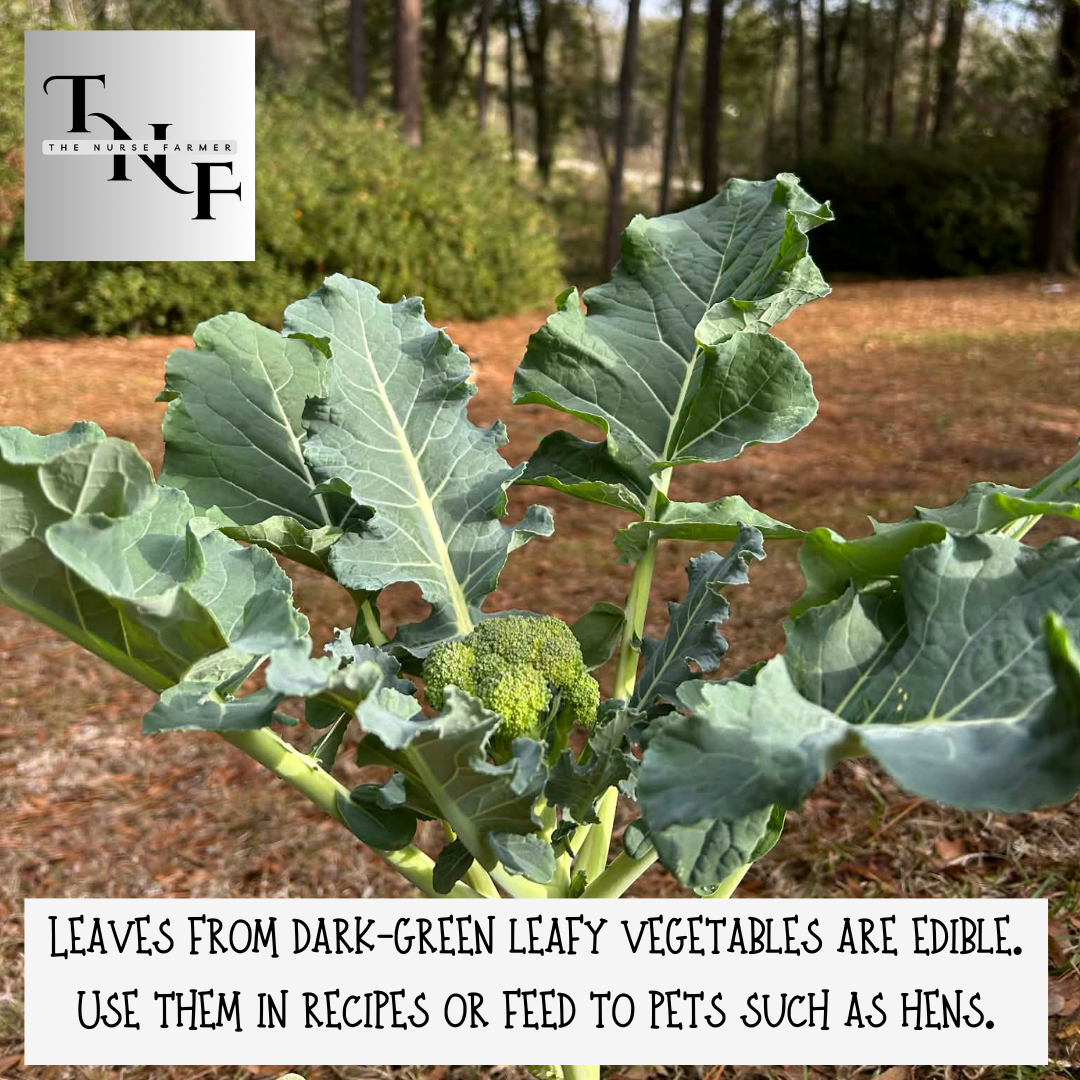
In closing, I will share a one more healthy tip. The greens leaves from cruciferous vegetables such as broccoli and cauliflower are edible. Don’t throw them away! For extra flavor and nutrition, add them to recipes such as soup or stir-fry. Be creative! When my sons were little, we used to chop the leaves and roll them into home-made egg-rolls. If you don’t want to to use the leaves in your own food, feed them to pets such as rabbits or hens. If you don’t have pets, consider taking the leaves to feed to the ducks or other fowl at a local park.
Thanks for reading!
Be sure to like and follow The Nurse Farmer on social media!
Clifton Joullian B.S.N., R.N.
The Nurse Farmer
